
Kinetic Modeling and Combustion Properties in Sustainable Aviation Fuels.
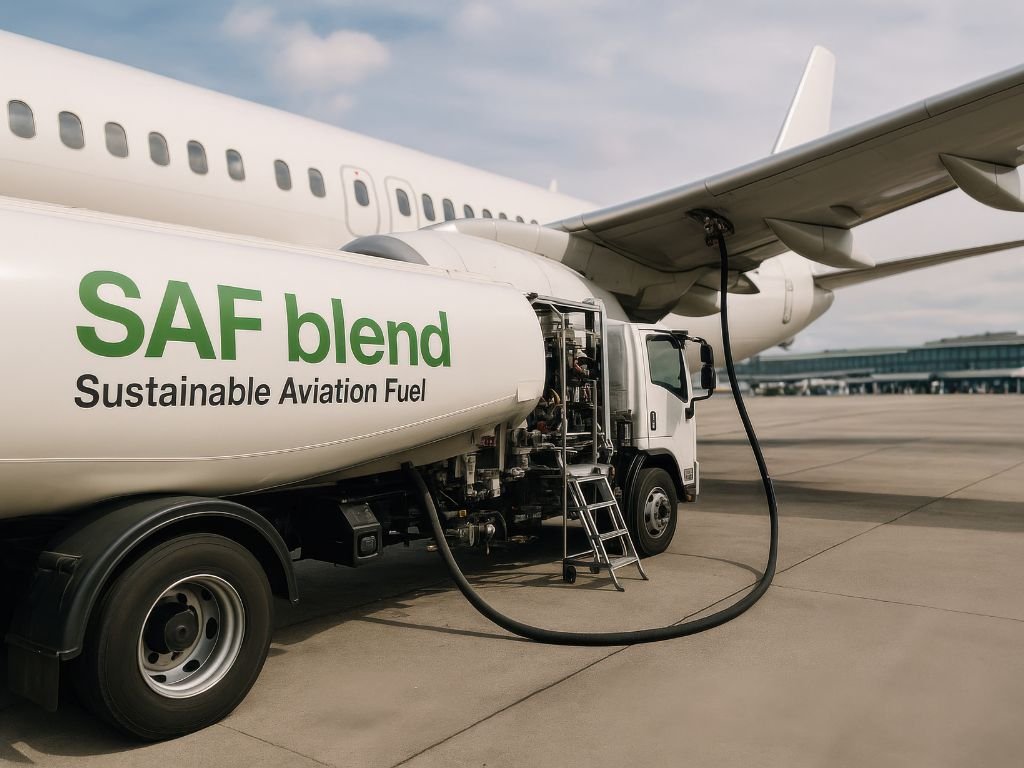
The aviation industry is a major contributor to global greenhouse gas emissions, driven by its dependence on conventional fossil fuels. As the demand for air travel rises, the urgency for sustainable alternatives, such as Sustainable Aviation Fuels (SAF), becomes increasingly clear. SAFs have the potential to reduce carbon emissions by up to 80% compared to traditional jet fuels, positioning them as a powerful solution for decarbonizing the aviation sector (Han et al., 2025). Understanding the combustion properties of sustainable aviation fuels (SAFs) and the significance of kinetic modeling in combustion processes are essential for optimizing their application in aviation.
Importance of Kinetic Modeling in Combustion Processes
Kinetic modeling serves as a vital tool in enhancing our understanding of fuel combustion behavior, particularly for sustainable aviation fuels (SAFs). By developing mathematical models that accurately depict the chemical reactions involved in combustion, we can make valuable predictions about key parameters such as ignition delay times, flame speeds, and emissions profiles. This approach not only advances our knowledge but also contributes to the optimization of fuel performance and environmental impact.
Kinetic models are essential for:
- Predicting Combustion Behavior: Kinetic models predict the behavior of different fuels during combustion, which is essential for achieving efficient and clean combustion in aircraft engines (Wang et al., 2025).
- Optimizing Fuel Formulations: By understanding reaction mechanisms and kinetics, researchers can optimize fuel formulations to improve performance and minimize emissions. This is especially important for sustainable aviation fuels (SAFs), which may differ in chemical composition from conventional fuels (Rijal et al., 2025).
- Streamlining Certification Processes: The airworthiness certification of sustainable aviation fuels (SAFs) requires a comprehensive understanding of their physicochemical properties and combustion characteristics. Kinetic modeling can facilitate this process by providing insights into the combustion chemistry of SAFs, promoting their large-scale adoption (Wang et al., 2025).

Relevance of Combustion Properties to Sustainable Aviation Fuels (SAF)
The combustion properties of sustainable aviation fuels (SAFs) are critical for their performance in aviation applications.
Key properties include:
- Ignition Delay Time (IDT): IDT is a vital parameter that influences engine performance and emissions. SAFs must have suitable IDT characteristics to ensure compatibility with existing aircraft engines (Wang et al., 2025).
- Flame Speed: The flame speed of a fuel affects the stability and efficiency of combustion. SAFs that exhibit appropriate flame speeds can enhance combustion efficiency and reduce the formation of harmful emissions (Wang et al., 2025).
- Emissions Characteristics: SAFs are engineered to reduce emissions of pollutants like particulate matter and nitrogen oxides. Understanding the combustion properties of SAFs enables the design of combustion systems that effectively lower these emissions (Xu, Fan, et al., 2025).
- Thermal Stability and Energy Density: The thermal stability and energy density of sustainable aviation fuels (SAFs) are crucial for their performance in aviation. These fuels must maintain stability under the varying temperature and pressure conditions encountered during flight (Rijal et al., 2025).
Kinetic Modeling in Combustion Processes
Kinetic modeling is a mathematical method used to describe the rates of chemical reactions and the mechanisms through which they occur. In the context of combustion, kinetic modeling is essential for predicting how fuels behave during combustion processes. This understanding is crucial for optimizing engine performance and reducing emissions. Kinetic models provide insights into how different fuels react under various conditions, enabling the design of more efficient combustion systems (Wang et al., 2025).
The main goal of kinetic modeling is to offer insights into the intricate interactions among fuel components, reaction intermediates, and products. By simulating these interactions, researchers can predict ignition delay times, flame speeds, and emissions profiles. These predictions are essential for the development of sustainable aviation fuels (SAF) and other alternative fuels. (Ramos-Fernandez et al., 2025).
Modeling Approaches
Kinetic modeling can be categorized into several approaches, each with its advantages and limitations:
- Detailed Chemical Kinetics:
- This method uses detailed reaction mechanisms that consider all possible reactions and species involved in the combustion process. Comprehensive kinetic models can provide highly accurate predictions of combustion behavior.
- Advantages: High accuracy and the ability to capture complex reaction pathways.
- Limitations: This process is computationally intensive and may need a significant amount of experimental data for validation (Wang et al., 2025).
- Reduced Mechanisms:
- Reduced mechanisms simplify detailed kinetic models by concentrating on significant reactions and species. This method is particularly beneficial for large-scale simulations where computational efficiency is essential.
- Advantages: Faster computations and reduced complexity while still capturing essential combustion characteristics.
- Limitations: Potential loss of accuracy and the risk of omitting important reactions that could influence combustion behavior (Wang et al., 2025).
- Surrogate Models:
- Surrogate models use simplified representations of fuel compositions to predict combustion behavior. These models are often based on a limited number of representative compounds that mimic the properties of more complex fuels.
- Advantages: Easier to implement and can be tailored to specific fuel types.
- Limitations: May not fully capture the nuances of complex fuel compositions (Wang et al., 2025).