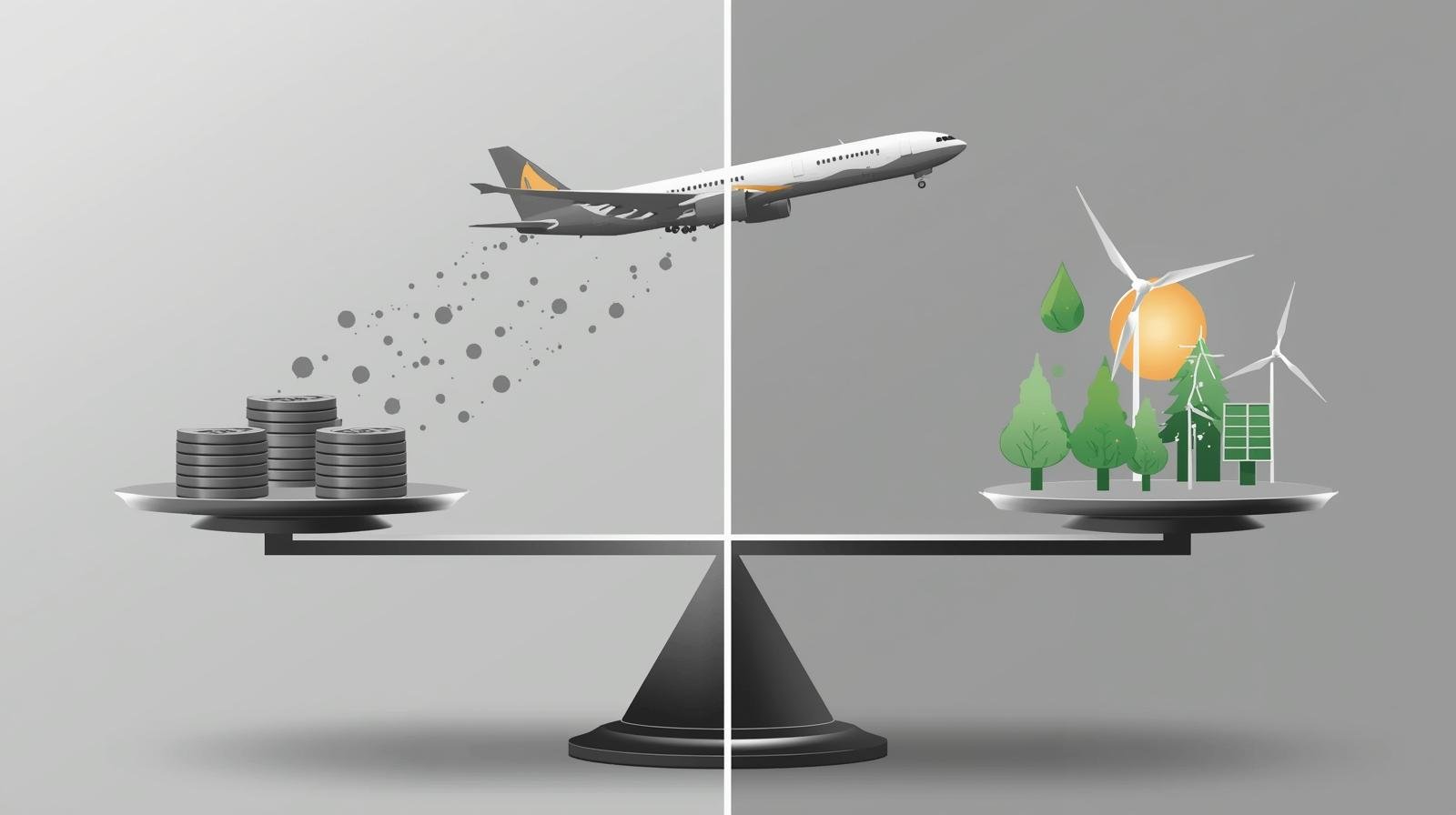
Do you know about Carbon Offsetting and Reduction Scheme for International Aviation (CORSIA) Phases?

The Carbon Offsetting and Reduction Scheme for International Aviation (CORSIA), launched by the International Civil Aviation Organization (ICAO) in 2016, is a market-based measure designed to help the aviation industry meet international greenhouse gas (GHG) mitigation goals. It aims to achieve carbon-neutral growth in the international aviation sector from 2020 onwards, specifically by offsetting emissions that exceed defined baseline levels.
Here’s a breakdown of CORSIA‘s implementation phases:
CORSIA’s Three Implementation Phases:
CORSIA is structured into three distinct phases, with varying degrees of participation and obligation:
- Pilot Phase (2021–2023):
- This phase was voluntary for ICAO member states.
- A total of 81 states officially participated, representing approximately 76% of international aviation activities in terms of Revenue Tonne-Kilometers (RTK)
- The baseline emissions for this phase were set to 2019 levels, adjusted from the initially proposed average of 2019-2020 due to the impact of the COVID-19 pandemic on international aviation.
- First Phase (2024–2026):
- Similar to the pilot phase, participation in this phase is also voluntary for ICAO member states.
- As of 1st January 2026, 130 states are participating in CORSIA.
- Second Phase (2027–2035):
- This phase is legally binding for all ICAO member states.
- Exemptions apply to least developed countries and states with a small share of international traffic (less than 0.5% of air traffic), unless they volunteer to participate.
- From this phase onwards, CORSIA will be fully mandatory
How CORSIA Works:
Aircraft operators with emissions greater than 10,000 tonnes CO2 from aircraft with a maximum certified take-off mass exceeding 5700 kg are required to prepare emission monitoring plans and annual emission reports for their international flights starting from January 1, 2019. To offset CO2 emissions exceeding the defined baseline, these operators must purchase “carbon offsets” from the Aviation Carbon Exchange (ACE). These offsets are credits from certified projects that reduce carbon emissions.
Role of Sustainable Aviation Fuels (SAF):
CORSIA encourages the use of Sustainable Aviation Fuels (SAF) as a key measure for achieving CO2 offsetting requirements. SAFs, defined within CORSIA Eligible Fuels, support maximum use and long-term investment in their production. Under CORSIA, emissions reductions from SAF use are calculated using a life-cycle assessment (LCA) approach.
Challenges and Criticisms:
Despite its global nature and ambitious goals, CORSIA has faced some criticism:
- The voluntary nature of the initial phases until at least 2027 may limit its immediate impact on emissions.
- Some observers question the credibility of offset-based strategies, particularly concerning non-CO2 warming effects and the reliance on forest offsets, which can be vulnerable to events like wildfires.
- The level of ambition of CORSIA for the international aviation sector has been deemed by the European Commission as not fully aligned with the global ambition required to meet the Paris Agreement’s temperature targets.
- While SAFs play a major role in reducing GHG emissions, cost barriers need to be overcome to ensure their large-scale deployment .