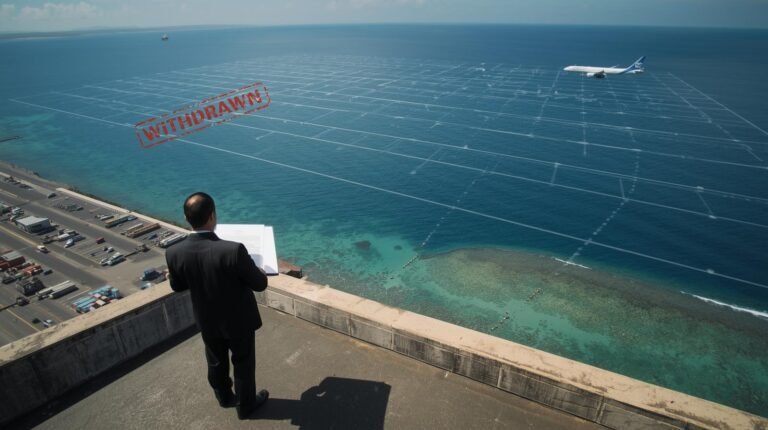
CORSIA (Carbon Offsetting and Reduction Scheme for International Aviation) aimed at offsetting emissions from international flights.

The Carbon Offsetting and Reduction Scheme for International Aviation (CORSIA) was established by the International Civil Aviation Organization (ICAO) to address the growing concern over carbon emissions from international aviation. This review synthesizes key findings from various research papers and reports regarding the primary objectives of CORSIA and its definition of “carbon-neutral growth.”
Primary Objectives of CORSIA
CORSIA aims to achieve carbon-neutral growth in international aviation from 2020 onwards.
The scheme’s primary objectives include:
- Mitigation of CO2 Emissions: CORSIA is designed to offset any increase in CO2 emissions from international flights above 2020 levels. This is crucial as the aviation sector is a significant contributor to global greenhouse gas emissions, with international aviation alone accounting for approximately 1.3% of global CO2 emissions (Abeyratne, 2017). The scheme requires airlines to purchase carbon credits to compensate for their emissions, thereby promoting investment in emission reduction projects outside the aviation sector (Chao et al., 2019).
- Global Participation and Compliance: CORSIA encourages voluntary participation in its initial phases (2021-2026), transitioning to mandatory participation for all member states from 2027 onwards, with certain exemptions for least developed countries and small island states (Chao et al., 2019). This phased approach aims to ensure broad compliance while considering the varying capabilities of different countries (Goncalves & Anselmi, 2019).
- Market-Based Mechanism: CORSIA operates as a market-based measure (MBM), allowing airlines to offset their emissions through the purchase of carbon credits generated from approved projects. This approach is intended to provide flexibility and economic efficiency in achieving emission reduction targets (Schinas & Bergmann, 2021).
- Support for Sustainable Aviation Fuels (SAFs): CORSIA promotes the use of sustainable aviation fuels as part of its strategy to reduce emissions. The scheme recognizes that technological advancements and operational improvements, alongside the adoption of SAFs, are essential for achieving its objectives (Hamdan et al., 2022).
Definition of “Carbon-Neutral Growth”
CORSIA defines “carbon-neutral growth” as the stabilization of net CO2 emissions from international aviation at 2020 levels. This means that any increase in emissions resulting from the growth of air traffic must be offset by equivalent reductions elsewhere. The baseline for this calculation is set as the average emissions from international aviation during the years 2019 and 2020 (Leclerc, 2019).
- Baseline Emissions: The baseline emissions are critical for determining the offsetting requirements for airlines. CORSIA mandates that airlines must offset any emissions exceeding this baseline, thereby ensuring that the growth in air traffic does not lead to an increase in overall emissions (Abeyratne, 2017).
- Long-Term Goals: While CORSIA focuses on carbon-neutral growth from 2020, it also aligns with broader climate goals, including the Paris Agreement’s targets for significant reductions in greenhouse gas emissions by 2050. The scheme aims for a 50% reduction in emissions from 2005 levels by 2050, indicating a long-term commitment to sustainability in the aviation sector (Leclerc, 2019).
- Implementation Phases: CORSIA is structured in three phases: a pilot phase (2021-2023), a first phase (2024-2026), and a second phase (2027-2035). The initial phases are voluntary, allowing countries to opt-in, while the second phase will be mandatory for all participating states, thereby reinforcing the commitment to carbon-neutral growth (Chao et al., 2019).
Implementation Phases of CORSIA
The Carbon Offsetting and Reduction Scheme for International Aviation (CORSIA) is a significant initiative established by the International Civil Aviation Organization (ICAO) to mitigate the impact of aviation emissions on climate change. CORSIA is structured into three distinct phases, each with specific objectives, participation requirements, and activities. This literature review synthesizes findings from various research papers and reports regarding the implementation phases of CORSIA, focusing on the pilot phase (2021-2023) and subsequent phases.
Overview of CORSIA Phases
CORSIA is implemented in three phases: the pilot phase, the first phase, and the second phase. Each phase has unique characteristics and requirements, as outlined below:
Pilot Phase (2021-2023)
- Participation: The pilot phase is voluntary, allowing states to opt-in based on their willingness to participate in the scheme. As of July 2020, 88 countries had announced their participation, representing a significant portion of international aviation traffic (Chao et al., 2019). This phase is crucial for testing the operational aspects of CORSIA and gathering data on emissions.
- Key Activities: During this phase, airlines are required to monitor and report their CO2 emissions. The baseline for emissions is set as the average emissions from 2019 and 2020, although the COVID-19 pandemic has led to discussions about using only 2019 emissions as the baseline due to significantly reduced air travel in 2020 (Marke et al., 2022). The pilot phase serves as a testing ground for the monitoring, reporting, and verification (MRV) processes that will be essential in later phases (Chao et al., 2019).
First Phase (2024-2026)
- Participation: Similar to the pilot phase, participation in the first phase remains voluntary. However, it is expected that more states will join as they observe the outcomes of the pilot phase. The participation of states is critical to achieving the scheme’s goals, as it aims to cover a substantial portion of international aviation emissions (Goncalves & Anselmi, 2019).
- Key Activities: The first phase will continue the monitoring and reporting of emissions, with a focus on refining the offsetting requirements based on the data collected during the pilot phase. The baseline emissions will still be calculated using the average emissions from 2019 and 2020, and airlines will begin to face more stringent reporting requirements (Chao et al., 2019).
Second Phase (2027-2035)
- Participation: The second phase marks a shift to mandatory participation for all ICAO member states whose airlines account for more than 0.5% of international aviation activities based on revenue tonne kilometers (RTKs) in 2018. Exemptions apply to least developed countries (LDCs), small island developing states (SIDS), and landlocked developing countries (LLDCs), which can choose to participate voluntarily (Goncalves & Anselmi, 2019); (Chao et al., 2019).
- Key Activities: This phase will implement a more rigorous framework for offsetting emissions, requiring airlines to purchase carbon offsets for emissions exceeding the established baseline. The offsetting requirements will be based on individual airline emissions and the growth of the aviation sector, with a gradual shift from a sectoral to an individual approach in calculating offsets (Liao et al., 2022). The second phase aims to ensure that the aviation sector achieves carbon-neutral growth from 2020 levels, addressing any annual increase in total CO2 emissions (Goncalves & Anselmi, 2019).
Differences Between the Pilot Phase and Subsequent Phases
The pilot phase differs significantly from the subsequent phases in terms of participation and requirements:
Voluntary vs. Mandatory Participation: The pilot and first phases are voluntary, allowing states to choose whether to participate. In contrast, the second phase mandates participation for most states, creating a more uniform approach to emissions reduction across the aviation sector (Chao et al., 2019) & (Goncalves & Anselmi, 2019).
Baseline Emissions Calculation: During the pilot phase, the baseline emissions are based on the average of 2019 and 2020 emissions. However, the COVID-19 pandemic has prompted discussions about using only 2019 emissions as the baseline, which could impact the offsetting obligations for airlines (Zelljadt et al., 2021) & (Marke et al., 2022). In the second phase, the established baseline will be strictly adhered to, with airlines required to offset emissions exceeding this baseline.
Regulatory Framework and Requirements: The pilot phase focuses on establishing the MRV processes and testing the operational aspects of CORSIA. In contrast, the second phase will implement a more comprehensive regulatory framework, requiring airlines to actively engage in carbon offsetting and adhere to stricter compliance measures (Chao et al., 2019); (Goncalves & Anselmi, 2019).
Baseline Emissions under CORSIA
The Carbon Offsetting and Reduction Scheme for International Aviation (CORSIA) is designed to achieve carbon-neutral growth in international aviation from 2020 onwards. A critical component of this scheme is the establishment of baseline emissions, which serves as a reference point for calculating the offsetting requirements for airlines. This literature review synthesizes findings from various research papers and reports regarding how the baseline for emissions is determined under CORSIA and the adjustments made due to the COVID-19 pandemic.
Determination of Baseline Emissions
Under CORSIA, the baseline for emissions is defined as the average CO2 emissions from international aviation during the years 2019 and 2020. This baseline is crucial as it establishes the threshold above which airlines must offset their emissions. The original plan was to calculate the average emissions over both years; however, this approach has been modified in light of the significant impact of the COVID-19 pandemic on air travel (Leclerc, 2019), (Chao et al., 2019).
Initial Baseline Calculation: The baseline emissions were initially intended to be the average of the emissions from 2019 and 2020. This calculation was designed to account for the normal operational levels of the aviation sector prior to the pandemic (Leclerc, 2019); (Marke et al., 2022)+++. The baseline serves as a benchmark for airlines to measure their emissions growth and determine their offsetting obligations.
Scope of CORSIA: CORSIA applies to all international flights between participating states, encompassing a wide range of operations, including passenger and cargo flights, while excluding certain categories such as humanitarian and medical flights (Sharma et al., 2021), (Guan et al., 2022).
Adjustments Due to COVID-19
The COVID-19 pandemic has had a profound impact on the aviation industry, leading to a drastic reduction in air travel and emissions. In response to these unprecedented circumstances, the International Civil Aviation Organization (ICAO) made significant adjustments to the baseline emissions calculation:
Change in Baseline Year: In June 2020, the ICAO Council voted to amend the baseline emissions calculation by removing 2020 emissions from the baseline. Instead, the baseline will now solely rely on the emissions from 2019 (Zhang et al., 2021), (Chao et al., 2019). This adjustment was made to avoid imposing undue economic burdens on airlines, as the emissions in 2020 were significantly lower due to the pandemic.
Implications of the Adjustment: The decision to use only 2019 emissions as the baseline means that airlines may face higher offsetting requirements in the future, as any emissions growth will be measured against a lower baseline (Zelljadt et al., 2021), (Dray & Schäfer, 2023). This change has raised concerns among stakeholders about the potential for reduced motivation to implement proactive emissions reduction measures, as the offsetting obligations may be less stringent in the short term (Zhang et al., 2021), (Chao et al., 2019).
Long-Term Considerations: The adjustments to the baseline emissions calculation due to COVID-19 have implications for the long-term effectiveness of CORSIA. Critics argue that the scheme may not adequately address the need for deeper emissions reductions in line with global climate targets, particularly as the aviation sector is expected to recover and grow in the coming years (Guan et al., 2022), (Leclerc, 2019).